New utility routes need careful planning, especially when gas pipework has to pass beneath hard surfaces, access roads, landscaped areas or busy working environments.
Directional drilling gives project teams a controlled way to install underground routes while keeping surface disruption to a practical minimum. It is a useful method when the route matters just as much as the pipe itself.
What directional drilling does for utility routes
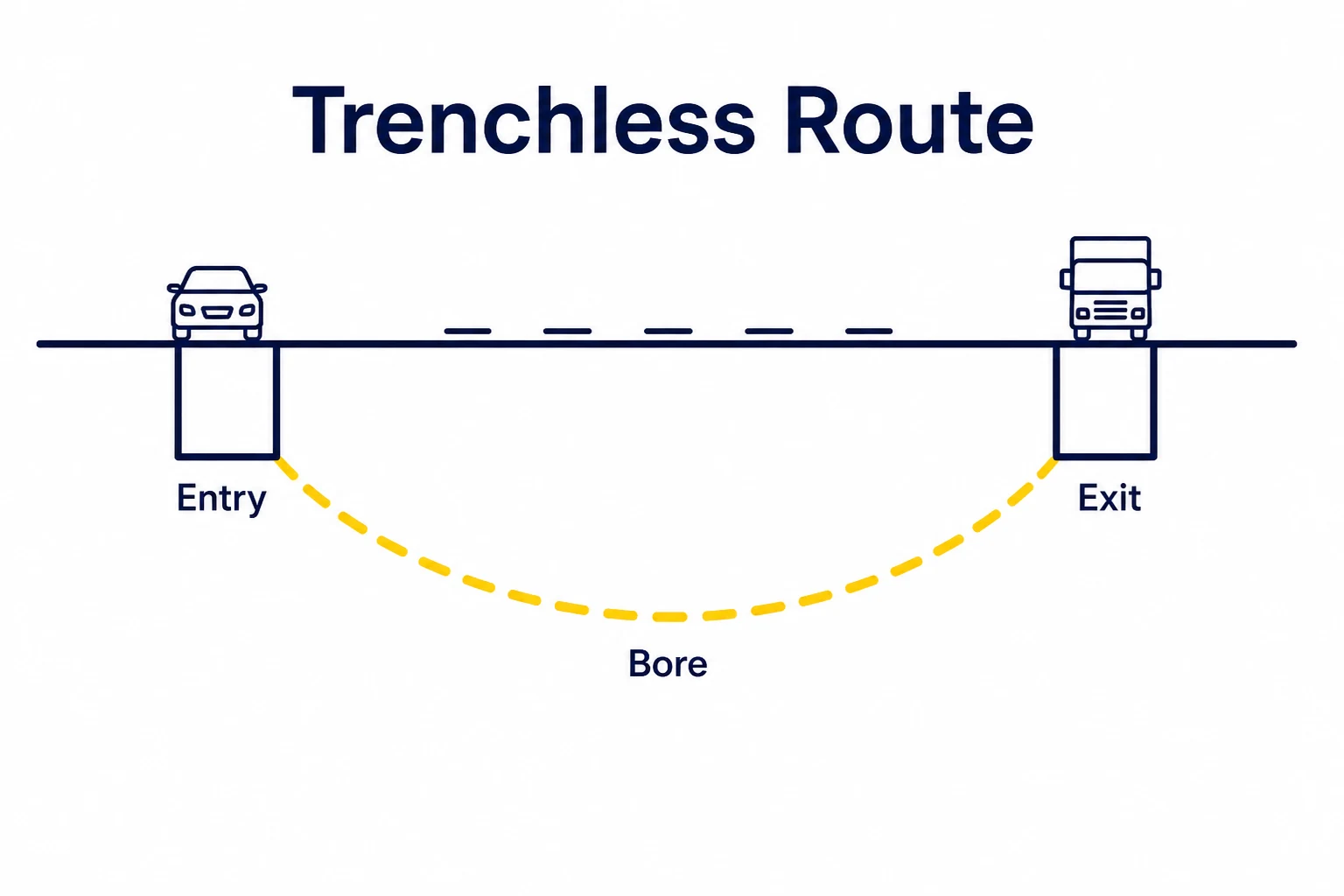
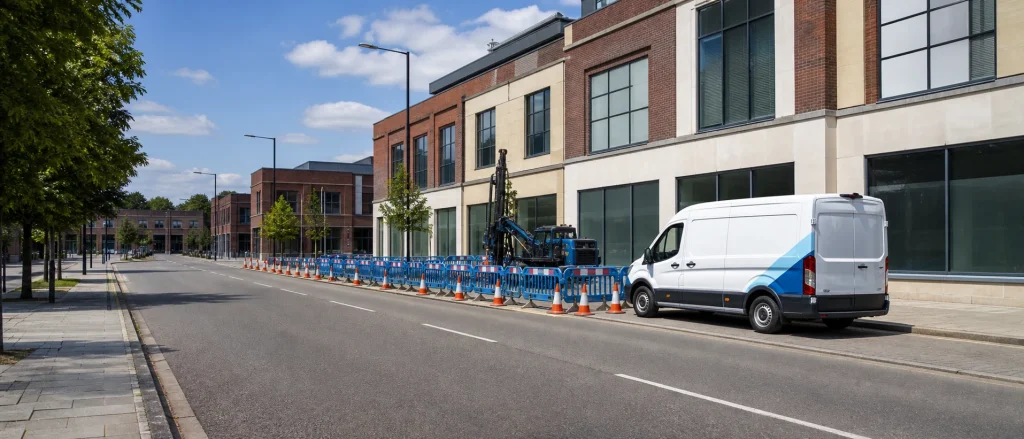
Directional drilling, also called horizontal drilling in many project discussions, creates an underground bore path without opening a continuous trench along the full route. A drilling rig forms a planned path below ground, then the pipe or duct is pulled back through the bore.
For gas pipework, this can be valuable where a new connection, diversion or extension needs to pass beneath surfaces that should remain usable wherever possible. Instead of exposing the whole route from end to end, the work is usually focused around entry and exit points, with the drilling taking place beneath the surface between them.
This is why directional drilling is often considered early in the planning of new utility routes. It can help engineers design a path that accounts for access, depth, existing services and reinstatement needs. For readers looking at the service itself, Atlas Gas explains its moling and directional drilling service in more detail.
The method is not simply about avoiding digging. It is about creating a reliable route in a way that suits the site, the surrounding activity and the gas engineering requirements that follow.
Why route planning comes before drilling
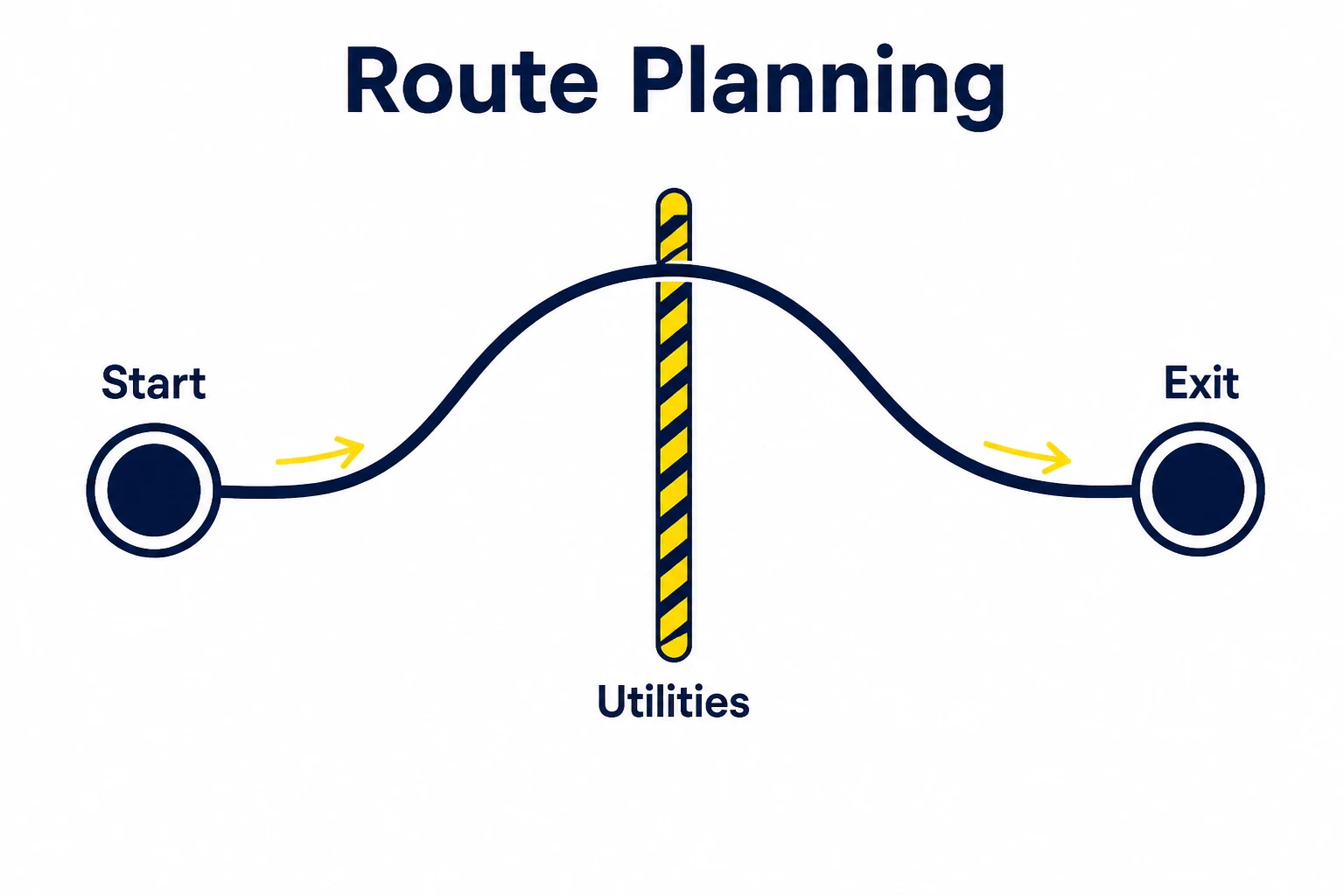
A successful drilled route starts with preparation. Before drilling begins, the contractor needs to understand where the pipe is intended to run, what the ground conditions may allow, and what existing underground services could affect the design.
Good planning normally considers:
- The entry point and exit point for the bore
- The required pipe size and depth
- The bend radius of the pipe being installed
- Known underground services and any survey findings
- Access for plant, materials and the working team
- How the route will connect into the wider gas pipework system
This planning stage helps avoid treating drilling as an isolated task. For gas work, the drilled route is only one part of the installation. The pipework must also be suitable for its purpose, correctly connected and prepared for testing, purging and commissioning as required.
That is why experienced drilling contractors work from a clear route plan rather than relying on guesswork once the rig is set up. The more carefully the route is assessed at the start, the more controlled the installation can be during the work itself.
Where trenchless drilling can help control disruption
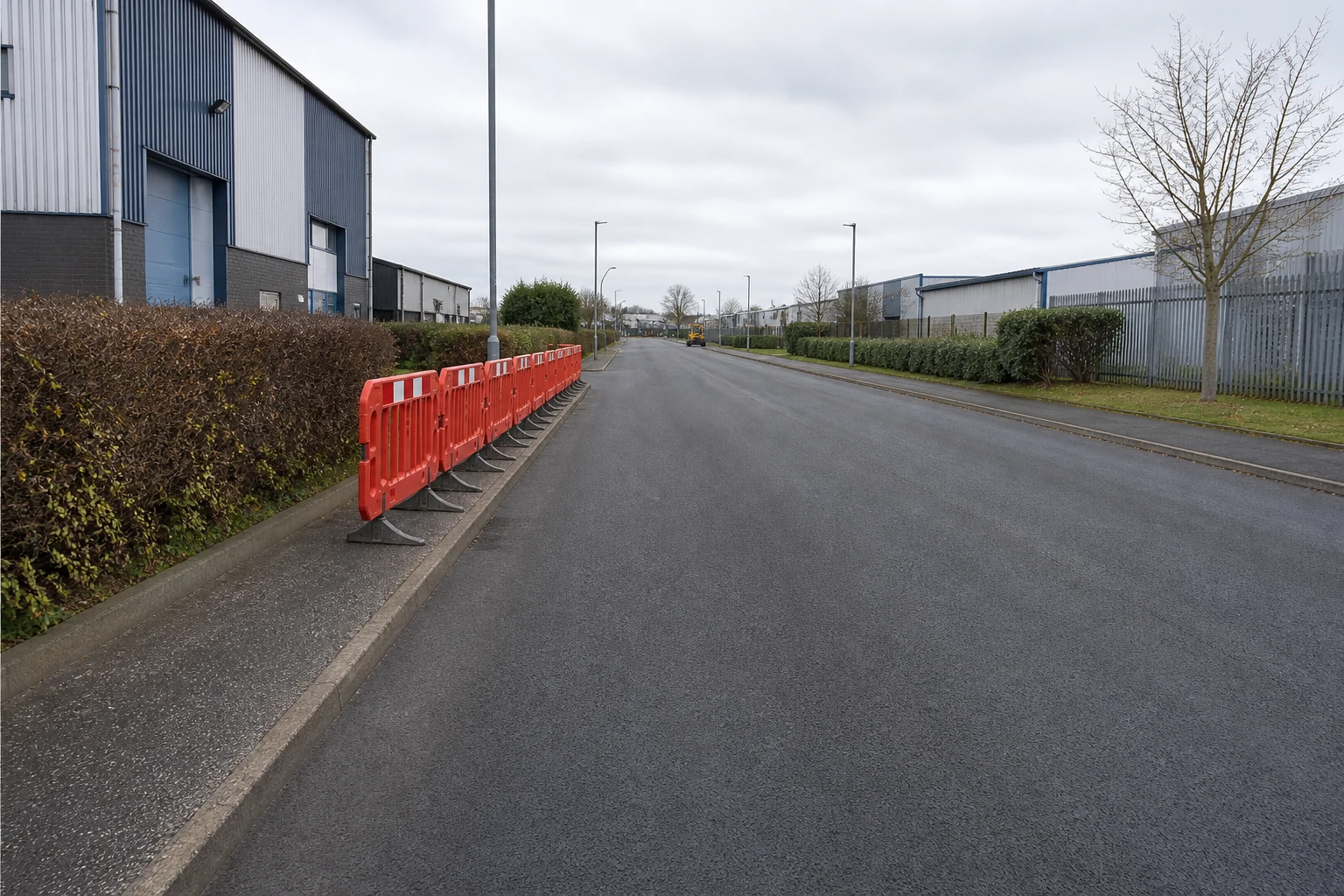
Directional drilling can be especially useful where opening a continuous trench would affect access, operations or finished surfaces. This might include routes beneath vehicle areas, pedestrian zones, commercial yards, service roads, forecourts, landscaped ground or internal site routes where disruption needs careful control.
The main benefit is that work can often be concentrated around selected points rather than spread across the entire route. That can make it easier to keep areas organised, maintain safer separation between workers and site users, and reduce the amount of reinstatement needed after installation.
This does not mean excavation disappears completely. There may still be launch pits, reception pits or connection excavations. The difference is that the route between those points can often be created underground, which helps limit the visible impact at surface level.
For a broader explanation of when drilling may be considered instead of open excavation, the article on directional drilling versus traditional excavation for gas installations gives useful background. This post focuses more specifically on how drilling supports new route creation.
How drilling fits into gas pipework projects
In a gas pipework project, the drilled section has to fit the wider engineering sequence. The bore path must support the intended pipe material, route alignment and connection points. Once the pipe is installed, the focus moves from forming the route to proving that the gas pipework is ready for use.
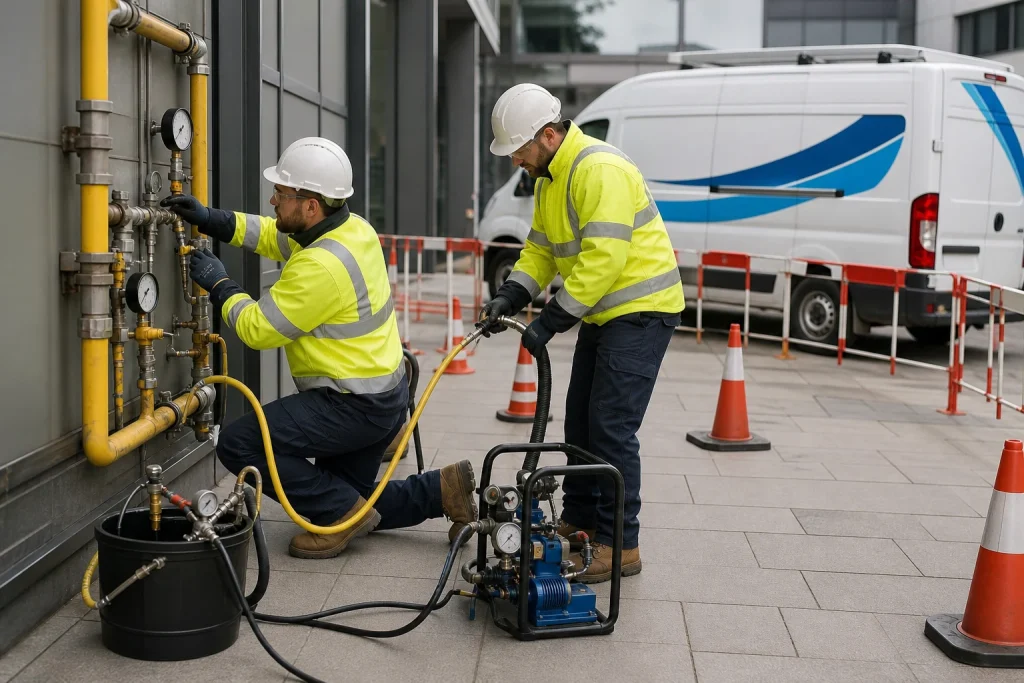
This can involve pressure testing, purging and other checks depending on the nature of the installation. These stages are important because underground installation work is only complete when the pipework has been properly verified and prepared for service.
Pressure testing helps confirm the integrity of the pipework before it is used. If you want a closer look at that part of the process, Atlas Gas has a helpful guide to what happens during a commercial gas pipework pressure test.
Purging is also a key consideration where gas pipework is brought into or taken out of service. The article on why commercial gas pipework is tested and purged before use explains why this step matters.
Seeing drilling as part of the complete gas engineering process helps clients make better decisions. The question is not only whether a route can be drilled. It is whether the route, pipework, testing and handover can all be delivered in a joined up way.
What to discuss with a drilling contractor
When discussing a new utility route with a drilling contractor, the most useful conversations are practical ones. A good contractor will want to understand the site, the service requirement and the constraints before recommending a method.
Useful points to cover include:
- What the new route needs to connect
- Whether the pipework is new, diverted or replacing an existing run
- Where access must be maintained during the work
- Whether existing service drawings or surveys are available
- What surface finishes need to be protected or reinstated
- How testing, purging and final connection will be handled
It is also worth discussing what information the contractor needs before attending site. Drawings, service records, access details and project timescales can all help the drilling team prepare properly.
The best outcome usually comes from involving the right expertise early. Directional drilling can be highly effective, but it should be selected because it suits the route and the gas pipework requirement, not because it is treated as a default answer for every situation.
The value of a controlled route
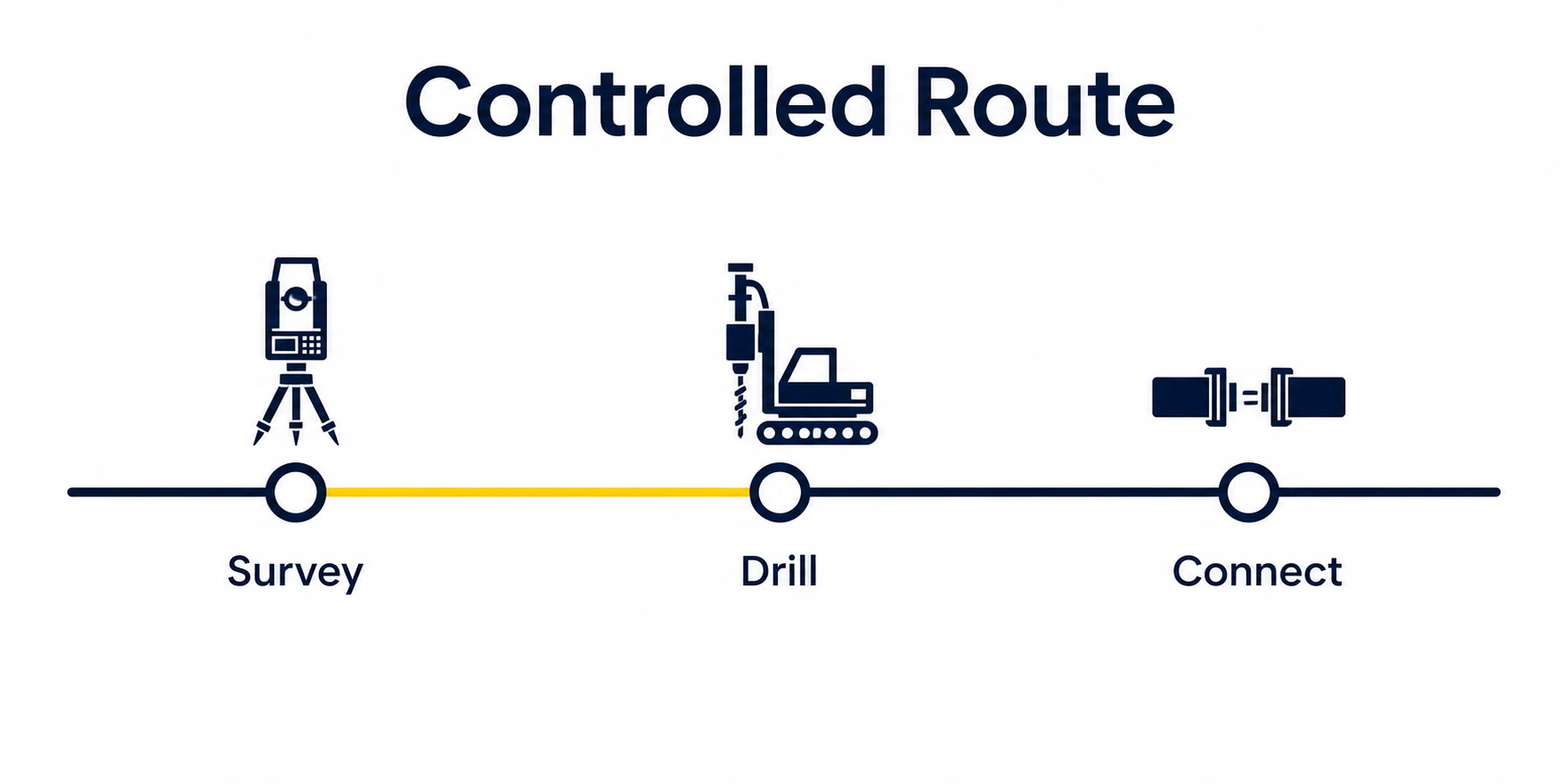
A well planned drilled route can make a gas pipework project more manageable from start to finish. It helps reduce unnecessary surface disturbance, supports cleaner site sequencing and allows the route to be designed around real constraints.
For building owners, facilities teams and project managers, this can make the work easier to coordinate. Access can often be managed more clearly, reinstatement can be more focused, and the installation can be planned around the operational needs of the site.
For engineers, the value is in control. Directional drilling allows the route to be considered in detail before the pipe is installed. That supports safer planning, clearer communication and a better connection between civil work and gas pipework requirements.
When used in the right setting, directional drilling is a practical way to create new utility routes without treating the surface as the only path available.
- Directional drilling creates underground routes without opening a continuous trench across the full path.
- The method is useful where surface disruption, access and reinstatement need careful control.
- Successful drilling depends on route planning, service awareness and suitable pipework design.
- For gas projects, drilling should be coordinated with installation, testing, purging and final connection.
- A good contractor will assess the route, site constraints and gas engineering requirements before recommending the method.
Frequently asked questions
Is directional drilling the same as horizontal drilling?
The terms are often used together. Horizontal drilling usually describes the general direction of the bore, while directional drilling highlights the ability to guide the underground route. In utility work, both terms may refer to trenchless installation methods used to create a controlled path below ground.
Does directional drilling remove the need for excavation?
Not completely. Most projects still need access points, connection excavations or inspection areas. The advantage is that the route between selected points can often be formed underground, which can reduce the amount of surface opening required.
Can directional drilling be used for gas pipework?
Yes, where the site conditions, route design and pipework requirements are suitable. The drilled route must be planned alongside the wider gas installation process, including connection, testing and purging where required.
What information helps before a drilling contractor visits site?
Useful information includes drawings, known service records, route requirements, access constraints, pipe size requirements and details of how the new pipework will connect into the wider system. The more complete the information, the better the contractor can assess the route.
Plan a cleaner utility route
If you are considering a new gas pipework route and want to understand whether directional drilling is suitable, Atlas Gas can help assess the practical options and plan the next step.