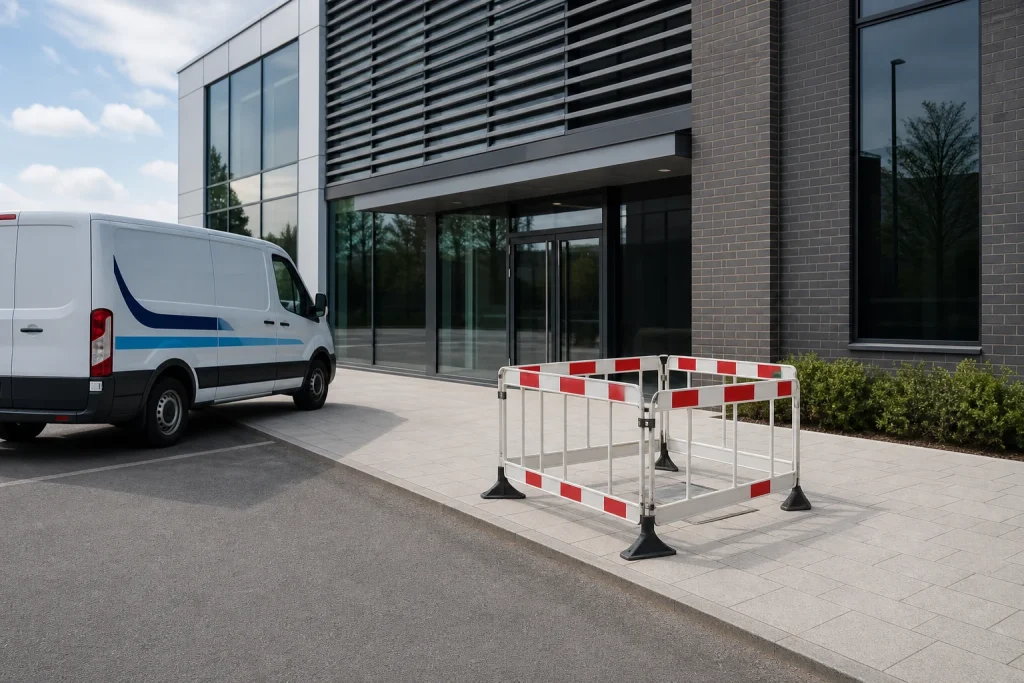
A suspected commercial gas leak needs a calm, methodical response. The priority is always safety, but that does not mean every investigation has to begin with wide excavation or major disruption.
Professional gas leak tracing helps engineers narrow the search area, gather evidence and plan targeted repairs. For commercial premises, that can make the difference between uncertainty and a clear, practical route back to safe operation.
Why leak tracing matters in commercial premises
Commercial gas systems can serve kitchens, plant rooms, production areas, heating systems and other business critical equipment. Pipework may run through service voids, external routes, yards, risers, ducts or buried sections. When there is a suspected leak, guessing where the problem sits is rarely the right approach.
Leak tracing gives the investigation structure. Engineers use site information, pressure testing, isolation, gas detection equipment and practical pipework knowledge to build a clearer picture of where gas may be escaping. The aim is to reduce uncertainty before repair work begins.
This is especially important where pipework is hidden, where access is limited, or where excavation would affect trading, deliveries, car parks, walkways or operational areas. A careful trace can help separate likely fault zones from areas that are still performing as expected.
Atlas Gas covers commercial gas leak detection and repairs for premises that need a safety led investigation and a practical repair plan. The value is not just in finding a leak, but in understanding the evidence well enough to decide the next step with confidence.
How engineers narrow down a suspected gas leak
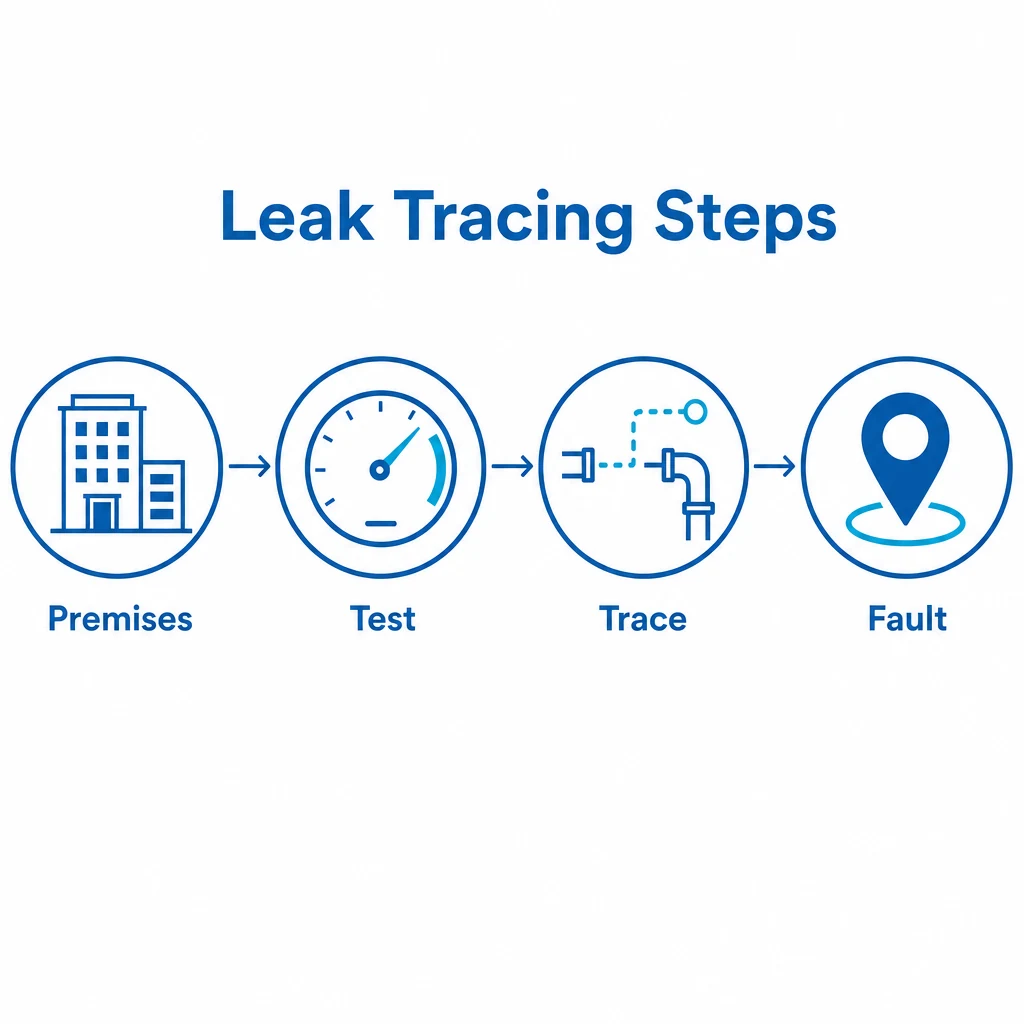
A good leak trace starts with information. Engineers will usually want to understand what has been noticed, when the issue was first identified, which appliances or areas are affected, and whether any recent works have taken place near the gas installation.
From there, the investigation can move through a sequence of checks. The exact method depends on the installation, but it may include reviewing accessible pipework, checking joints and fittings, isolating sections, monitoring pressure behaviour and using detection equipment in controlled areas.
Isolation is often a key part of the process. By separating parts of the system where it is safe and practical to do so, engineers can compare one section with another. This helps narrow the fault location without treating the entire installation as one unknown area.
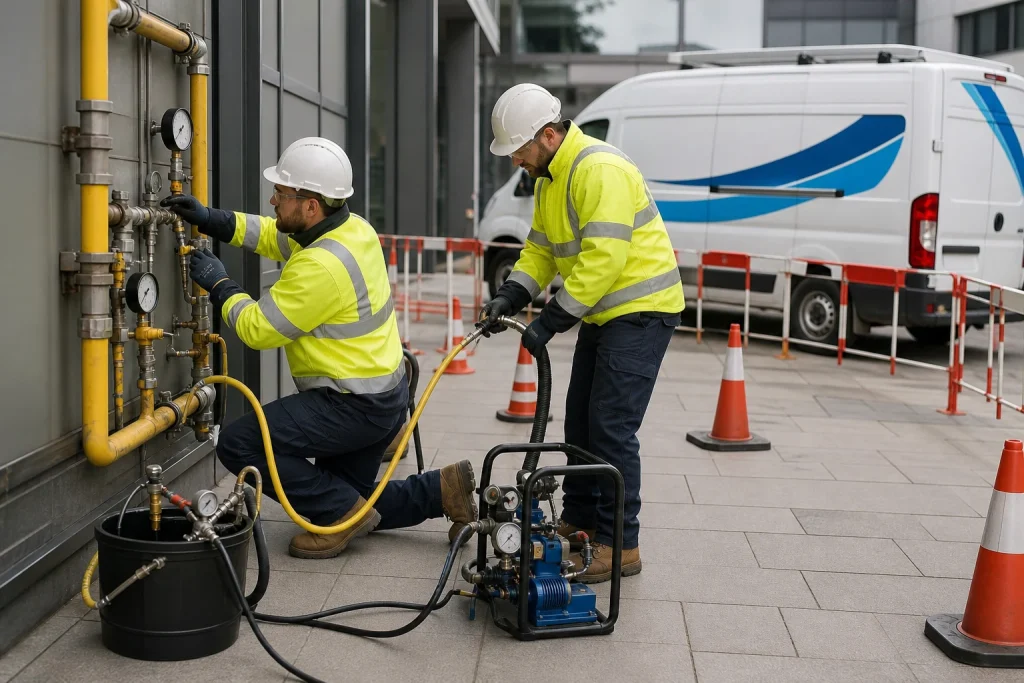
Pressure testing also provides useful evidence. It can show whether a section is holding pressure as expected or whether there is a loss that needs closer investigation. For commercial systems, this work should be planned and carried out by competent engineers who understand the relevant safety requirements and the practical realities of the site.
Leak detection instruments can then support the trace in accessible areas. These tools do not replace engineering judgement, but they can help confirm where closer inspection is needed. The best results usually come from combining readings with a clear understanding of pipe routes, materials, valves and site conditions.
How tracing helps avoid unnecessary excavation
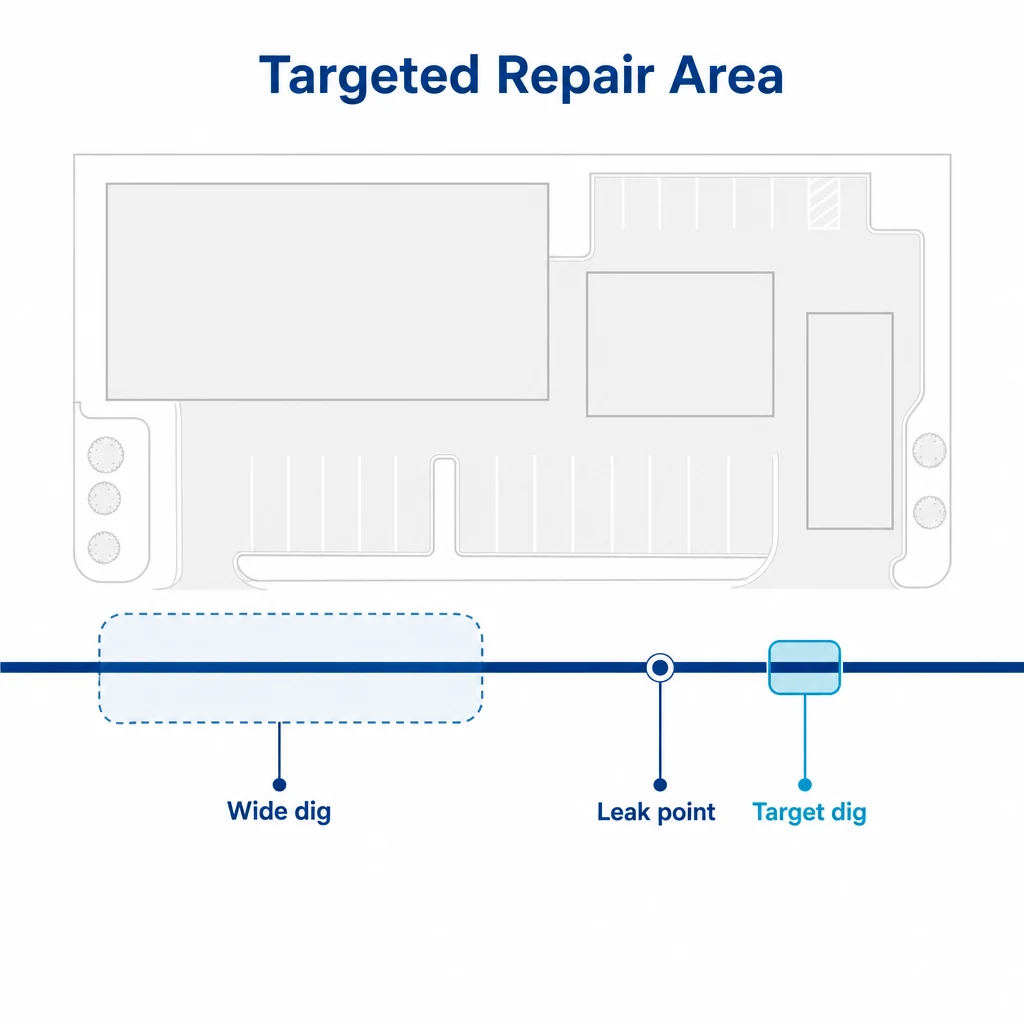
Excavation can be necessary when a buried pipe section is confirmed or strongly suspected to be the issue. The point of leak tracing is not to avoid excavation at all costs. The point is to avoid opening ground without enough evidence.
On commercial sites, unnecessary excavation can affect access, deliveries, parking, customer areas, production schedules and other trades. It can also create more reinstatement work than needed. By narrowing the suspected fault area first, engineers can plan a more focused repair.
For example, if pressure loss appears only when a particular buried section is included, the investigation can concentrate on that route. If an internal section holds pressure and an external branch does not, the repair plan becomes clearer. If a valve, joint or transition point is implicated, the work can often be planned around that evidence.
This evidence led approach also helps building managers and facilities teams communicate with stakeholders. Instead of simply saying that a leak is suspected somewhere on the site, they can explain what has been tested, what has been ruled out and why the repair area has been chosen.
Where older installations are involved, tracing may also reveal that repeated faults are linked to wider pipework condition. In those cases, it can be useful to consider the guidance in upgrading old gas pipework in commercial premises, because targeted repair and planned replacement are sometimes part of the same conversation.
What happens after the leak has been traced
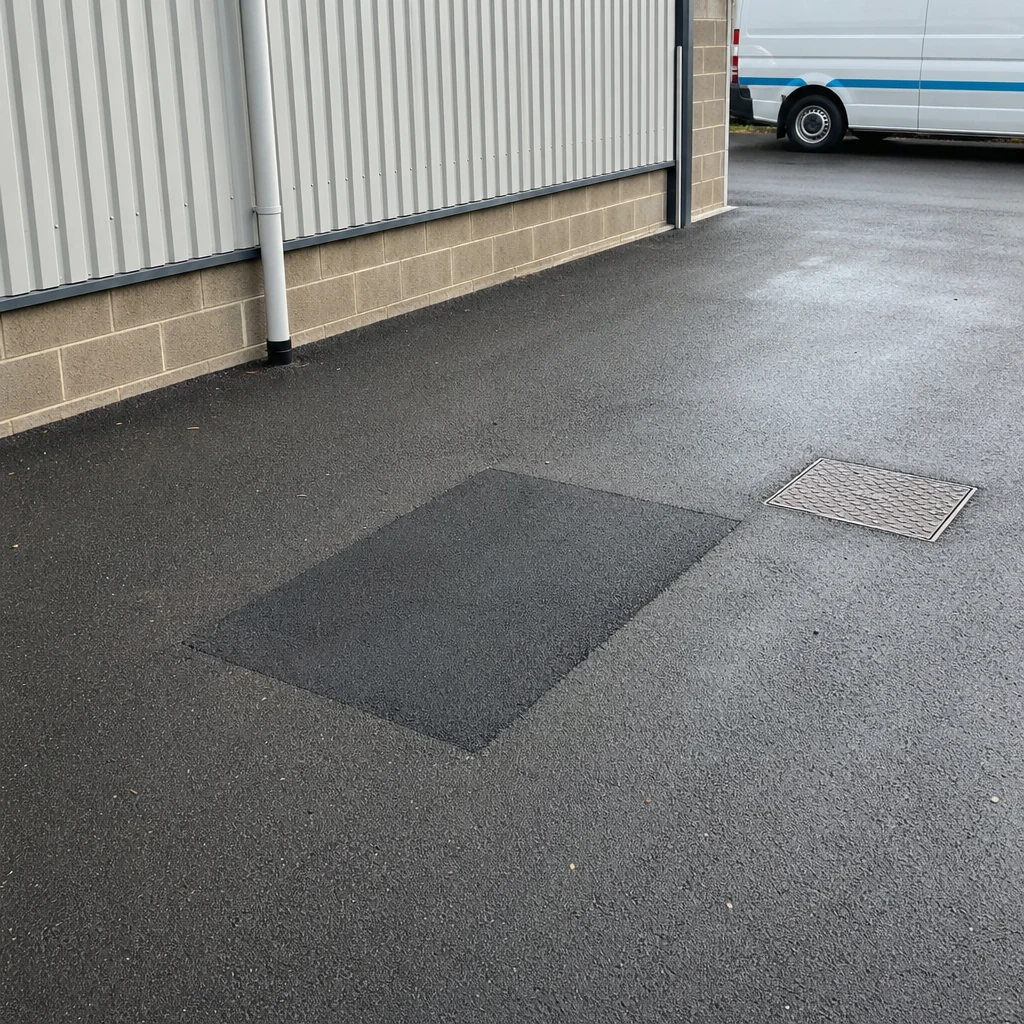
Once the likely leak location has been narrowed down, the next stage is repair planning. This may involve exposing a small area, replacing a damaged fitting, renewing a pipe section, altering a route, or planning more substantial works if the condition of the installation calls for it.
The important point is that the repair should follow the evidence. Commercial gas pipework is safety critical, so any decision needs to consider access, isolation, testing, purging, reinstatement and how the system will be returned to service.
After repair work, the affected pipework must be tested appropriately before it is put back into use. Depending on the nature of the work, purging may also be required so that gas or air is safely removed or introduced in a controlled manner. Businesses with larger or more complex systems may find it useful to understand commercial gas testing and purging as part of the wider process.
Good repair planning also considers sequencing. Engineers may need to coordinate with site managers, maintenance teams, other contractors and operational staff. The goal is to keep the work controlled, documented and aligned with the safe use of the premises.
Why early reporting supports a better outcome
A commercial gas leak should never be ignored. If gas is smelt, suspected or indicated by monitoring, the situation needs to be treated seriously and handled through the correct safety procedures. Emergency action may be needed before any planned investigation takes place.
Once the immediate situation is safe, early professional investigation can make the next stage more manageable. The sooner a suspected issue is assessed, the sooner engineers can decide whether the concern relates to a fitting, a valve, an appliance connection, a buried section or a wider pipework issue.
Delays can allow uncertainty to grow. They can also make it harder for facilities teams to plan around business operations. A separate Atlas Gas article on the cost of ignoring minor gas leaks in commercial buildings explains why small warning signs still deserve proper attention.
Early tracing does not mean rushing the job. It means getting competent engineers involved while there is still room to plan carefully. That is often the best way to keep the response proportionate, safety focused and based on real site evidence.
What commercial teams should prepare before engineers arrive
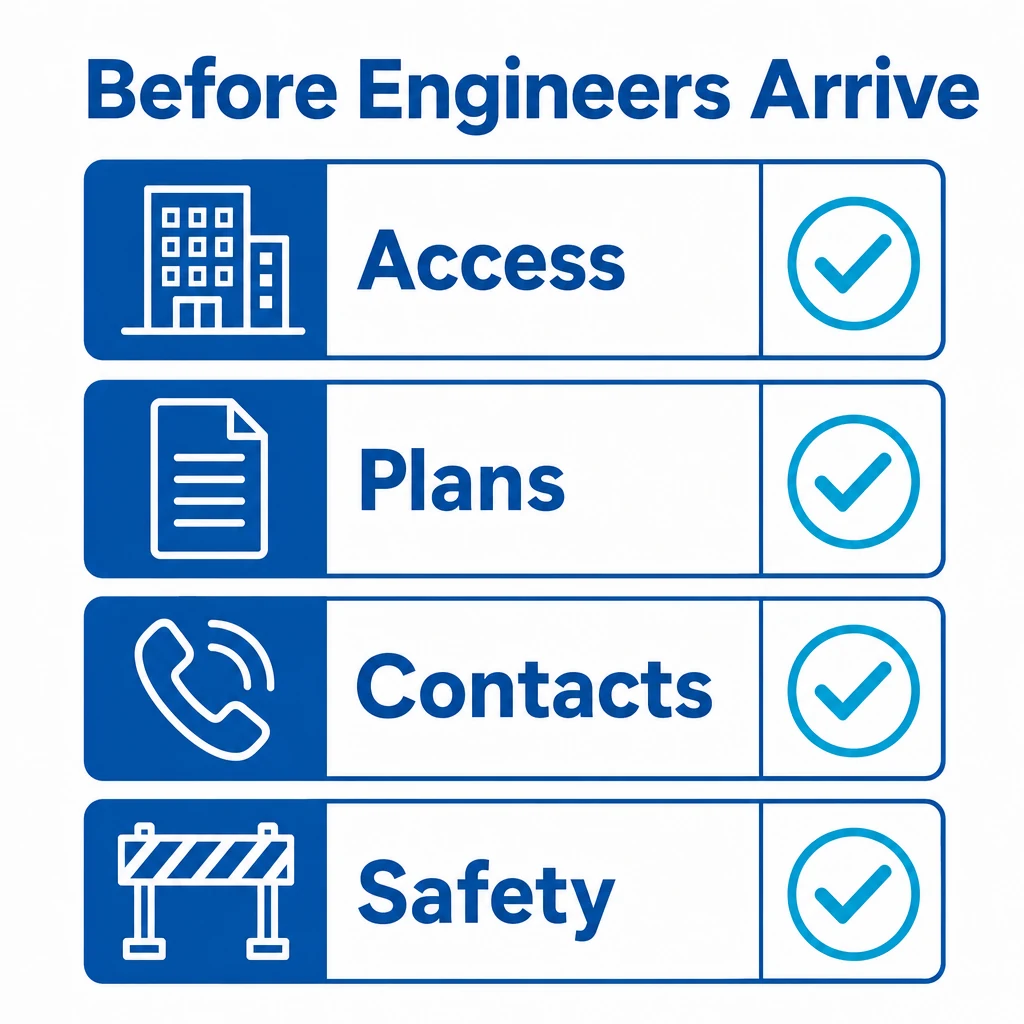
Facilities managers, landlords and site supervisors can help the investigation by gathering relevant information before the engineer arrives, as long as it is safe to do so. Useful details may include known pipe routes, previous test records, recent maintenance notes, appliance lists and any drawings that show gas services.
It can also help to identify who has authority to isolate areas, approve access and coordinate with building users. On busy commercial premises, simple preparation can save time and reduce confusion during the investigation.
Useful information may include:
- Where the suspected leak was first noticed.
- Whether any work has recently taken place near gas pipework.
- Which appliances, meters or plant areas are connected to the affected system.
- Any known buried pipe routes, ducts, risers or service voids.
- Previous gas testing, purging, repair or alteration records.
This information does not replace professional testing, but it gives the engineer a stronger starting point. The more clearly the site history is understood, the easier it is to trace the fault in a logical order.
- Commercial gas leak tracing helps narrow the suspected fault area before repair work begins.
- Pressure testing, isolation and detection equipment can support a more evidence led repair plan.
- Targeted repair planning can reduce avoidable disruption to commercial premises.
- Excavation may still be needed, but tracing helps make it more focused and justified.
- Early reporting gives engineers more scope to plan a controlled and safety focused response.
Frequently asked questions
Can a commercial gas leak be traced without digging?
In many cases, engineers can narrow down the suspected area before any ground is opened. Testing, isolation and detection work can help identify whether excavation is needed and where it should be focused.
Who should investigate a suspected commercial gas leak?
Commercial gas work should be handled by competent, appropriately registered engineers. If there is an immediate smell of gas or safety concern, follow emergency gas safety procedures first.
Does leak tracing always find the exact point of escape?
The aim is to gather enough evidence to guide safe repair planning. Sometimes the exact point is confirmed before access work. In other cases, tracing narrows the area so excavation or opening up can be targeted.
What happens if the pipework is old or repeatedly leaking?
A repair may solve the immediate issue, but repeated faults can point to wider condition problems. Engineers may recommend further testing, replacement of affected sections or a planned upgrade where that is the safer and more practical option.
Need help with a suspected commercial gas leak?
Atlas Gas can investigate, trace and plan commercial gas leak repairs with a practical, safety focused approach. Get in touch to discuss the issue and arrange the right next step.